Straight answers to claim problems
Written for people in the middle of a claim. Each guide answers the question first, links its sources, and says so when the honest answer is that it depends on your state.
- 20 guides and 246 linked sources.
- No insurer, adjuster or law firm wrote or paid for any of them.
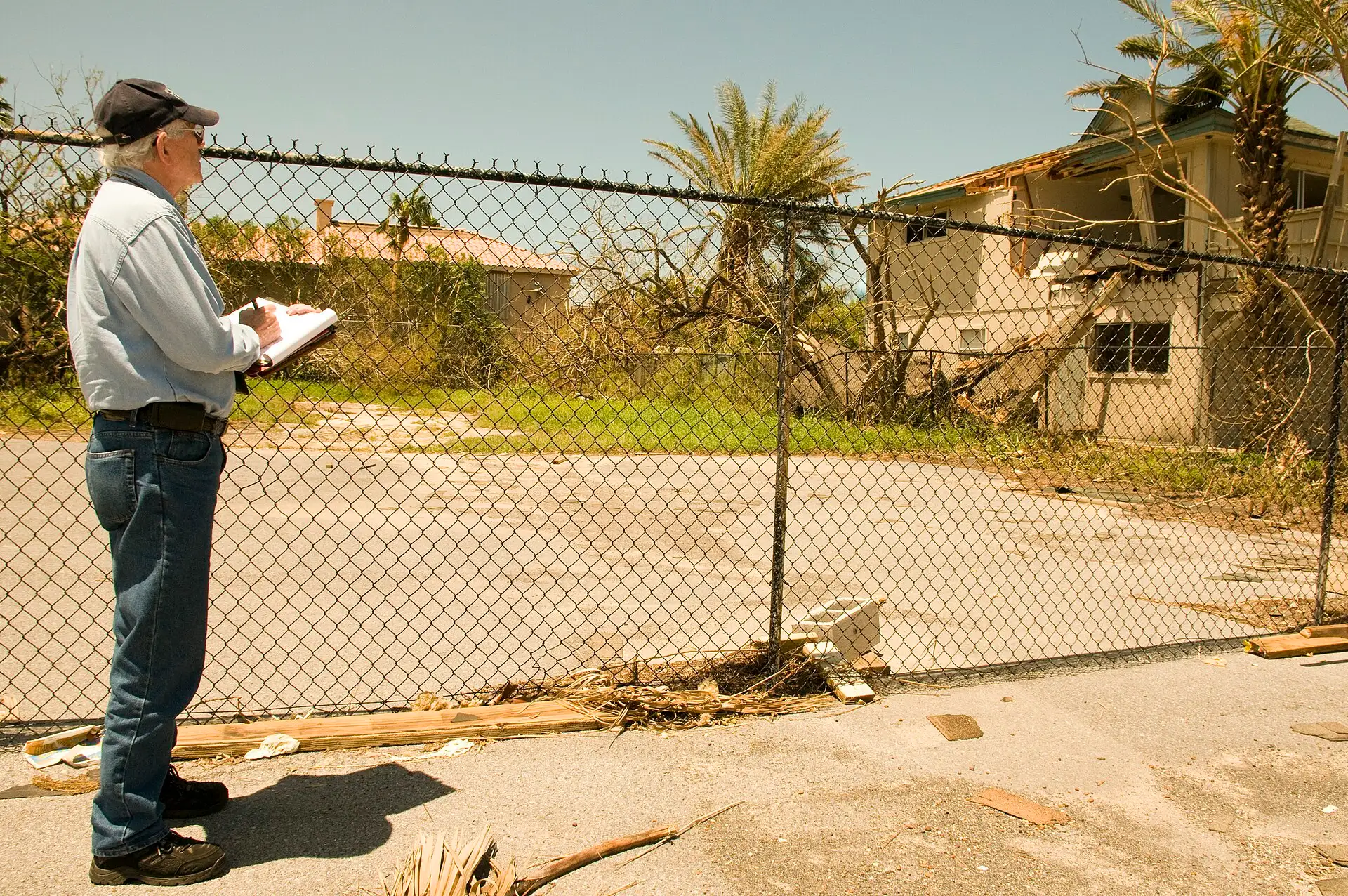
Photo: a federal damage inspector surveys a storm-damaged home on South Padre Island, Texas, July 2008. Patsy Lynch / FEMA, public domain. Use does not imply endorsement.

Where are you in your claim?
Pick the line that sounds like today.
All 20 guides
In the order a claim usually unfolds.
Filing a claim (4)
From the day of the damage to the first payment: what to do, what to keep, and how the money is worked out.
Actual cash value vs replacement cost: what your claim pays
What actual cash value and replacement cost mean, why the first check is smaller, how held-back depreciation is recovered, and what to ask your insurer.
Additional living expenses: what loss of use coverage pays
What additional living expense (loss of use) coverage pays when you cannot live at home, what it leaves out, its limits, receipts, and what to ask your insurer.
How to document property damage for an insurance claim
What to photograph, how to build a room-by-room contents list, which receipts and damaged items to keep, what goes in a claim log, and what insurers ask for.
How to file a home insurance claim, step by step
The steps from the day of the loss to the first payment: stopping more damage, telling your insurer, the inspection, proof of loss and what to keep in writing.
By type of damage (3)
Roof, water and flood claims each follow their own rules. What adjusters look for and where claims go wrong.
Flood insurance claim: how an NFIP claim works, step by step
How a National Flood Insurance Program claim works: reporting, the adjuster, the 60-day proof of loss, what the policy leaves out and how to appeal.
Roof damage insurance claim: hail, wind and what gets paid
What an adjuster looks for on a hail or wind roof claim, repair versus replacement, actual cash value roofs, storm deductibles and door-to-door offers.
Water damage insurance claim: sudden leaks, slow leaks and mold
The line policies draw between sudden water damage and slow leaks, why flood is a separate policy, mold limits, first steps and what to ask your insurer.
When the claim goes wrong (7)
Delays, low offers and denials, and every way to push back, starting with the free ones.
How to file an insurance complaint with your state
How to complain to your state insurance department about a property claim: what to gather, what the department can and cannot do, and what happens next.
Insurance claim denied: how to read the letter and your options
How to read a denial letter, the reasons insurers give, what to ask for in writing, and the paths open to you after a property claim is denied.
Insurance offer too low: why it happens and what you can do
Why an insurer's offer can be below the repair cost, how to compare estimates line by line, how held-back depreciation works, and your options.
Public adjuster vs attorney vs appraisal: how they compare
Six ways to dispute a property insurance claim compared: what each costs, what it can do and what it cannot. Includes a side-by-side table.
Supplemental insurance claims: when more damage is found
What to do when more damage turns up after a property claim is paid or closed: supplemental claims, reopening a claim, written notice and state deadlines.
The insurance appraisal clause: how it works and who pays
How the appraisal clause in a property policy works: the written demand, picking appraisers and an umpire, who pays, and what appraisal cannot decide.
What to do when your insurance claim is taking too long
States set deadlines for insurers to acknowledge, decide and pay claims. How to log contact, ask for a written status and file a complaint.
Public adjusters: the basics (2)
What a public adjuster is, what they can and cannot do, and whether you need one.
Do I need a public adjuster? An honest way to decide
When a public adjuster tends to be worth the fee, when one likely is not, and the free and low-cost steps you can try on your own first.
What is a public adjuster and what do they do?
A public adjuster works for you, not your insurer, on a property claim. What they do, who pays them, what they cannot do, and how they are licensed.
What it costs (1)
How fees work, what your state allows, and the sum to do before you sign.
Hiring one (3)
Choosing an adjuster, reading the contract, and telling an adjuster from a contractor.
Contractor or public adjuster: who can handle your claim?
A contractor repairs the damage. A public adjuster negotiates the claim. Where state law draws the line, what an assignment of benefits is, and storm red flags.
How to choose a public adjuster and check their license
How to verify a public adjuster's license, what to ask, what the contract has to say, the warning signs after a storm, and how to negotiate the fee.
Public adjuster contract: what it must say and your rights
What a public adjuster contract has to contain, how the fee must be written, how long you have to cancel in eight states, and what it cannot take away.
No guide matches that. Try one word, such as "roof" or "deadline", or look in the glossary.
Tools that go with the guides
Free, with no account. Nothing you type leaves your browser.
Is my insurer taking too long?
See the deadlines your state sets for your insurer, and how many days have passed.
Check the clockIs a public adjuster worth the fee?
Work out how much a public adjuster would have to add before you come out ahead.
Run the numbersWhat must the contract say?
A checklist of what your state says a public adjuster contract must contain.
Check a contractDo I need a public adjuster at all?
Six questions. An honest answer, including when the answer is no.
Take the quizWho is licensed near me?
See the public adjusters licensed where the damaged property is, from state records.
Find an adjusterWhat does my state say?
Fee caps, cancellation rights and insurer deadlines, each matched to the law.
See state rulesSix ways to dispute a claim
From handling it yourself to hiring an attorney: what each route costs and what it can do.
- Do it yourself
- Insurance department complaint
- State mediation
- Appraisal clause
- Public adjuster
- Attorney
Stuck on a word?
Actual cash value, proof of loss, appraisal, recoverable depreciation: the glossary explains claim terms in a sentence or two.