Know where you stand on your insurance claim.
Claim rules change at the state line: how long your insurer has, what a public adjuster may charge, what a contract must say. Tell us what is happening and where. We will show you the rule, the law behind it and what to do next.
Checked against the law
Florida
Deadlines the law sets for your insurer
- 1Acknowledge your claim7 calendar days
- 2Accept or deny it60 days
- 3Pay what is owed20 days
Most a public adjuster can charge
20% 10% after a disaster
Time to cancel a contract
10 calendar days
Storm records for Florida, 2016 to 2025
- 11,638
- storm reports
- $42B
- damage reported
- 44
- major disasters since 2000
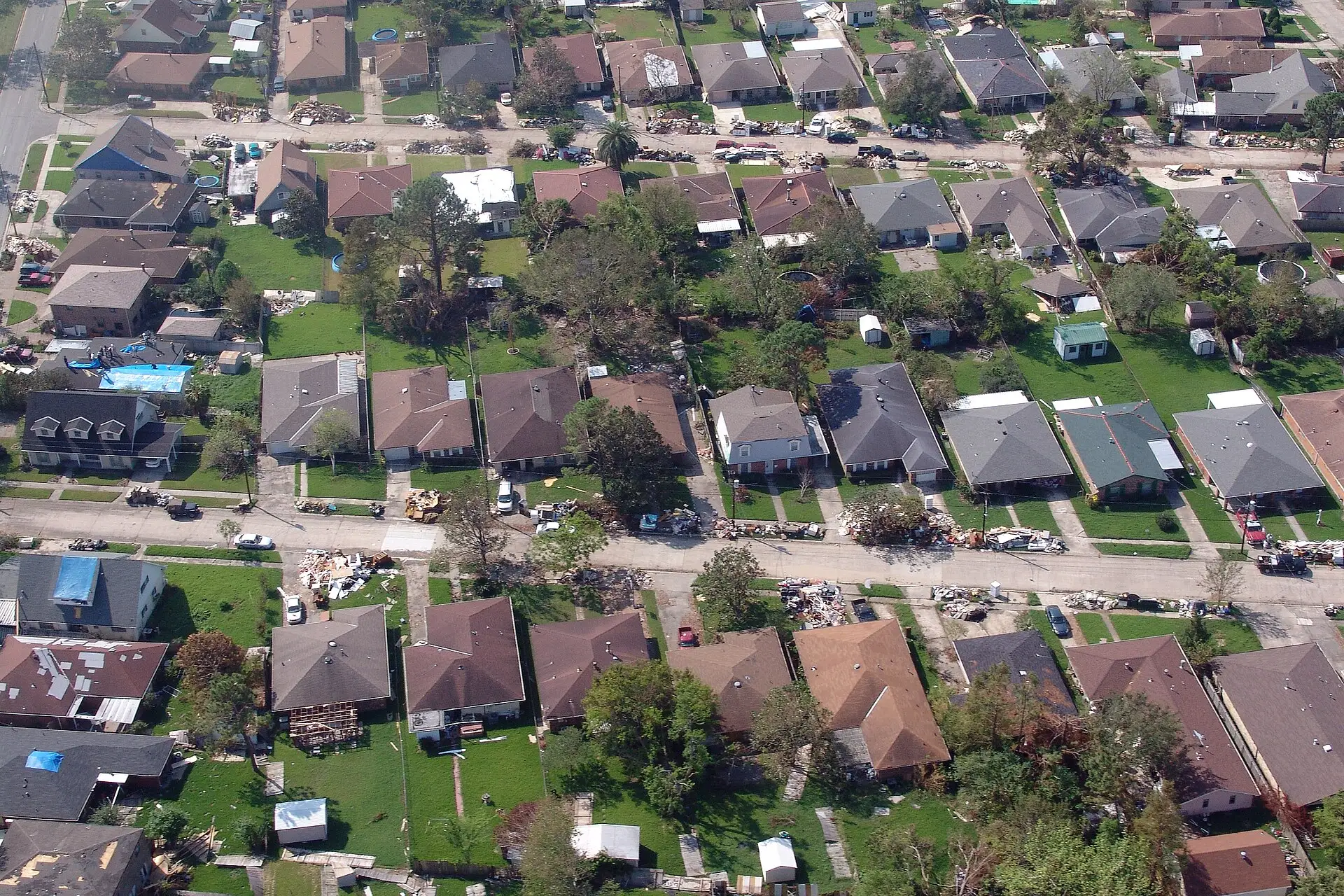
Photo: tarped roofs in Louisiana after Hurricane Katrina, September 2005. Greg Henshall / FEMA, public domain. Use does not imply endorsement.

What is happening with your claim?
Pick the situation closest to yours. Each one gives you three steps and the tool or guide that deals with it.
My claim is taking too long
Find out whether your insurer is past a deadline
Many states set time limits for an insurer to acknowledge a claim, decide it and pay it. The first job is to find out which limits apply to you and where you are against them.
- 1Write down your dates
The day you reported the claim, and the day you sent the last documents the insurer asked for.
- 2Check them against your state
The Claim Clock counts the days for you and shows the rule each deadline comes from.
- 3Ask in writing
Ask the insurer for the status of the claim and the reason for any delay. Keep a copy of everything.
The offer is too low
Compare the offer with what the repairs cost
A low offer usually comes down to a difference in scope, in price or in what the policy covers. You cannot tell which until you see the insurer's figures line by line.
- 1Get the insurer's estimate
Ask for the full estimate, not just the total, and the policy sections it relied on.
- 2Get your own number
Ask a licensed contractor for a written, itemised estimate of the same repairs.
- 3Compare, then choose a route
Send the differences in writing. If you are still apart there are several ways to dispute it.
My claim was denied
Read the denial before you answer it
A denial is the insurer's position, not always the end of the claim. What you can do next depends on the reason it gives.
- 1Get it in writing
Ask for the denial letter and the exact policy wording the insurer is relying on.
- 2Read that part of your policy
Check the wording the letter cites against your own copy of the policy.
- 3Note your time limits
Your policy and your state both set deadlines for disputing a decision. Find them early.
Should I hire a public adjuster?
See how a public adjuster could help your claim
A public adjuster documents your loss and negotiates with the insurer for you, usually for a share of the claim payment.
- 1Answer six questions
The quiz looks at the size of the claim, where it stands and what is in dispute.
- 2Run the fee
See how the fee works on your claim and what you would keep.
- 3Check the licence
If you go ahead, look the adjuster up in the state's records before you sign anything.
I have a contract to sign
Check the contract against your state's rules
Many states set what a public adjuster contract must contain, limit the fee and give you a period to cancel. Check those three things before you sign.
- 1Look up the adjuster
Confirm the licence is active and that the name matches the contract.
- 2Check the fee
Compare the percentage in the contract with any limit your state sets.
- 3Find the cancellation period
Know how long you have to change your mind, and how to do it in writing.
Find or check an adjuster
Look the adjuster up in official records
States that license public adjusters keep a public record of who holds a licence. Checking takes a minute, and the state's own lookup always has the last word.
- 1Start with where the property is
See who is licensed there, from official state records, with a phone number where the state publishes one.
- 2Confirm with the state
Each listing links to the state's own lookup. Use it to confirm the licence is active today.
- 3Match the paperwork
The name and licence number on the contract should match the state record.
How a property claim usually goes
Five steps, and where this site helps at each one.
- Step 1
You report the damage
This is the date most state deadlines for your insurer start counting from.
See your state's deadlines - Step 2
The insurer's adjuster inspects
This adjuster is paid by the insurance company, not by you.
Who each adjuster works for - Step 3
The insurer decides
You get an offer or a denial. Ask for it in writing, with the reasons.
How to read a denial - Step 4
You check the numbers
Compare the insurer's estimate with a contractor's, line by line.
When the offer is too low - Step 5
You accept, or you dispute
If the figures do not match, there are six ways to push back.
Compare your options
Free tools, built on your state's rules
No account and no email form. Each result shows the rule it came from.
Is my insurer taking too long?
See the deadlines your state sets for your insurer, and how many days have passed.
Check the clock Fee CalculatorWhat would I keep after the fee?
See how a public adjuster's fee works on your claim and what you would keep.
Run the numbers Contract CheckWhat must the contract say?
A checklist of what your state says a public adjuster contract must contain.
Check a contract Do I need one?Is a public adjuster right for my claim?
Six questions about your claim, and a clear answer with the reasons.
Take the quizThree kinds of adjuster. Only one works for you.
The adjuster your insurance company sends is paid by the insurance company. A public adjuster is the only kind you hire yourself.
| Company adjuster | Independent adjuster | Public adjuster | |
|---|---|---|---|
| Who hires them | Your insurance company | Your insurance company | You |
| Who pays them | The insurer, as an employee | The insurer, as a contractor | You, usually from the claim payment |
| Whose figure they produce | The insurer's | The insurer's | Yours |
Every state writes its own rulebook
Fee caps, cancellation rights and insurer deadlines change at the state line. In some states a public adjuster cannot take a home claim at all.
states verified against the law
statutes and rules cited and quoted
A state goes up only after each rule has been matched to its source. States in grey are still being checked. Point at a state to see its headline rule.
Compare state rules- Public adjusters licensed
- Restricted
- Not licensed
- Guide being verified
Policyholders with a public adjuster were paid more
The Florida Legislature's research office compared 76,321 claims filed with Citizens Property Insurance, the state-run insurer. In each group it reported, claims where a public adjuster represented the policyholder received larger payments.
574% more
Everyday claimsnot from a declared catastrophe
747% more
2005 hurricane claimsDennis, Katrina, Rita and Wilma
19% more
2004 hurricane claimsCharley, Frances, Ivan and Jeanne
Source: Office of Program Policy Analysis and Government Accountability, Florida Legislature, Report No. 10-06, January 2010 (opens in a new tab), pages 7 and 8. Typical (median) payments on claims filed from March 2008 to June 2009, before the public adjuster's fee. Percentages are worked out from the report's dollar figures; the report itself states 574% and 747%. Every figure from the study

Hiring a public adjuster after a storm
Three quick checks put you on firm footing before you sign.
- The licence. Look the adjuster up in the state's own records. Check a licence
- The contract. Your state sets what it must say and how long you have to cancel. Contract checklist
- The disaster rules. Some states lower the fee cap after a declared disaster. Recent declarations
What hits your state, in numbers
Ten years of storm reports, reported damage and federal disaster records for every state, compiled from NOAA and FEMA data.
storm event reports, 2016 to 2025
property damage estimated in those reports
- Texas $67B
- Florida $42B
- Louisiana $37B
- California $22B
- North Carolina $5.9B
- Hawaii $5.7B
- Colorado $5.5B
- Oregon $3.9B
Straight answers to claim problems
Each guide answers the question first and links its sources.
- Actual cash value vs replacement cost: what your claim pays
What actual cash value and replacement cost mean, why the first check is smaller, how held-back depreciation is recovered, and what to ask your insurer.
- Additional living expenses: what loss of use coverage pays
What additional living expense (loss of use) coverage pays when you cannot live at home, what it leaves out, its limits, receipts, and what to ask your insurer.
- Hiring Contractor or public adjuster: who can handle your claim?
A contractor repairs the damage. A public adjuster negotiates the claim. Where state law draws the line, what an assignment of benefits is, and what to check.
- Basics Do I need a public adjuster? An honest way to decide
When a public adjuster is most useful, which claims are often settled directly with the insurer, and the free and low-cost steps you can take on your own.
- Flood insurance claim: how an NFIP claim works, step by step
How a National Flood Insurance Program claim works: reporting, the adjuster, the 60-day proof of loss, what the policy leaves out and how to appeal.
- Hiring How to choose a public adjuster and check their license
How to verify a public adjuster's license, what to ask, what the contract has to say, the rules on contact after a storm, and how to negotiate the fee.
- How to document property damage for an insurance claim
What to photograph, how to build a room-by-room contents list, which receipts and damaged items to keep, what goes in a claim log, and what insurers ask for.
- How to file a home insurance claim, step by step
The steps from the day of the loss to the first payment: stopping more damage, telling your insurer, the inspection, proof of loss and what to keep in writing.
- Disputes How to file an insurance complaint with your state
How to complain to your state insurance department about a property claim: what to gather, what the department can and cannot do, and what happens next.
- Disputes Insurance claim denied: how to read the letter and your options
How to read a denial letter, the reasons insurers give, what to ask for in writing, and the paths open to you after a property claim is denied.
- Disputes Insurance offer too low: why it happens and what you can do
Why an insurer's offer can be below the repair cost, how to compare estimates line by line, how held-back depreciation works, and your options.
- Hiring Public adjuster contract: what it must say and your rights
What a public adjuster contract has to contain, how the fee must be written, how long you have to cancel in eight states, and what it cannot take away.
- Fees Public adjuster fees: what they charge and when it pays
How public adjuster fees work, what the percentage is charged on, the caps in Florida, Texas and Louisiana, and the break-even math before you sign.
- Disputes Public adjuster vs attorney vs appraisal: how they compare
Six ways to dispute a property insurance claim compared: what each costs, what it can do and what it cannot. Includes a side-by-side table.
- Roof damage insurance claim: hail, wind and what gets paid
What an adjuster looks for on a hail or wind roof claim, repair versus replacement, actual cash value roofs, storm deductibles and door-to-door offers.
- Disputes Supplemental insurance claims: when more damage is found
What to do when more damage turns up after a property claim is paid or closed: supplemental claims, reopening a claim, written notice and state deadlines.
- Disputes The insurance appraisal clause: how it works and who pays
How the appraisal clause in a property policy works: the written demand, picking appraisers and an umpire, who pays, and what appraisal cannot decide.
- Water damage insurance claim: sudden leaks, slow leaks and mold
The line policies draw between sudden water damage and slow leaks, why flood is a separate policy, mold limits, first steps and what to ask your insurer.
- Basics What is a public adjuster and what do they do?
A public adjuster works for you, not your insurer, on a property claim. What they do, who pays them, what they cannot do, and how they are licensed.
- Disputes What to do when your insurance claim is taking too long
States set deadlines for insurers to acknowledge, decide and pay claims. How to log contact, ask for a written status and file a complaint.
Is that adjuster licensed?
Search 7,136 public adjusters and firms from official state records in Florida, Texas, Iowa, Nebraska, Louisiana, Ohio and Nevada.
A listing is not a recommendation. Always confirm a licence with the state.
Are you a licensed public adjuster? You can be the featured adjuster in the cities you serve for a flat yearly fee, clearly labelled as advertising.
How featured listings work